A Quick History of Savannah, Georgia
To understand Savannah, we look back to its founding by James Oglethorpe in 1733 as a strategically planned, egalitarian settlement with strict rules prohibiting slavery and alcohol. Alliances, like those with Chief Tomochichi and the Yamacraw Tribe, shaped Savannah’s early stability and diversity. Later, a shift to royal governance led to legalized slavery, fueling the cotton economy. Challenges, including Revolutionary War occupation, devastating fires, and epidemics tested Savannah’s resilience, ultimately paving the way for modernization through railroads and expanding industries. Savannah’s transformation holds deeper insights into America’s evolving economic and cultural landscape.
Savannah’s Founding and Early Beginnings
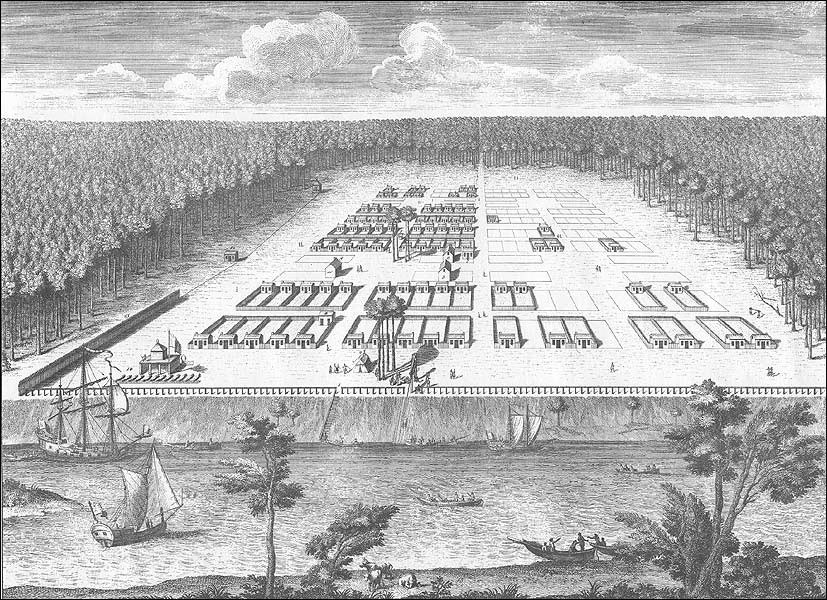
When James Oglethorpe and 120 colonists aboard the ship Anne founded Savannah on February 12, 1733, they deliberately selected Yamacraw Bluff as their settlement’s site, approximately 18 miles inland along the Savannah River. We recognize their strategic choice prioritized natural defenses, freshwater access, and elevation for safety. Peaceful negotiations with Yamacraw leader Tomochichi further minimized potential early challenges. Savannah’s colonial objectives aimed to protect British territories from Spanish and French encroachments, while providing refuge for England’s disadvantaged social diversity. Through careful city planning, Oglethorpe devised an orderly layout promoting communal safety and equality. The Guardians’ strict governance structure initially prohibited slavery and alcohol, encouraging agrarian independence and social stability. Though early hardships arose, Savannah’s structured beginnings ultimately fortified its resilience. Similar to traditional practices seen in Australian savannas, colonists recognized the importance of controlled use of regular wildfires in maintaining agricultural areas and promoting ecological balance.

The Vision of James Oglethorpe
Although James Oglethorpe founded Savannah primarily to safeguard British interests against foreign encroachment, his vision extended far beyond mere defense. Oglethorpe’s ideals encompassed Enlightenment impact, evident in Savannah’s innovative urban design featuring equitable landholdings and integrated public squares to foster community engagement and social welfare. He pursued sustainable agriculture, promoting small Mediterranean-style farms to guarantee economic self-sufficiency without relying on slavery. His military strategy combined defensive fortifications like Fort Frederica with diplomatic negotiations to secure peaceful relations. Rejecting concentrated wealth, Oglethorpe prohibited large estates and encouraged uniform housing, embedding fairness into Savannah’s structure. Oglethorpe also demonstrated humanitarian values through his early advocacy for prison reform, sparked by the tragic death of his friend Robert Castell in prison. Today, through thoughtful legacy planning, his principles continue to shape Savannah as a safe, walkable city known worldwide for its balance between growth, equality, and protection.
Alliance With the Yamacraw Tribe
James Oglethorpe’s vision for Savannah rested not only on enlightened planning and social equity but also on diplomatic relationships with indigenous groups. Recognizing the strategic importance of Yamacraw Bluff, Oglethorpe engaged in careful Yamacraw Diplomacy with Chief Tomochichi, whose tribe had settled there after breaking from Creek and Yamasee peoples. Through negotiations mediated by interpreter Mary Musgrove, we established agreements in 1733 that balanced colonial expansion with respect for Tribal Sovereignty. These treaties included mutual defense, trade rights, and protection of sacred Yamacraw burial sites. Our alliance provided settlers a secure foundation, access to essential agricultural knowledge, and a protective buffer against potential Spanish threats from Florida, while the Yamacraw tribe gained political legitimacy, British goods, and recognition of their sovereignty by King George II. The Yamacraw community eventually rejoined the Lower Creeks as British colonization expanded into their territory.

Arrival of Savannah’s First Jewish Settlers
Five months after Savannah’s founding, on July 11, 1733, 42 Jewish settlers arrived aboard the ship William and Sarah, marking a notable expansion of the colony’s religious and cultural diversity. Initially, colonial restrictions caused uncertainty about their acceptance, but James Oglethorpe allowed their stay, citing Georgia’s inclusive charter. These settlers brought valuable skills to Savannah, including medical expertise from Dr. Samuel Nunes, who halted a deadly yellow fever outbreak, enhancing the colony’s safety. Abraham de Lyon introduced critical viticulture knowledge, boosting economic stability. Though internal religious tensions between Sephardic and Ashkenazic groups briefly challenged cohesion, Jewish contributions notably strengthened Savannah’s development. Their early establishment of Congregation Mickve Israel created lasting institutions, fostering community resilience amid colonial hardships and uncertainties.
Transition to a Royal Colony
As we examine Savannah’s shift from Trustee management to royal governance in 1752, it’s clear that financial struggles and restrictive Trustee policies prompted this significant change. The end of Trustee rule removed barriers to land ownership and slavery, leading to rapid expansion of plantation agriculture. This transformation profoundly redefined Savannah’s economy and society, setting the stage for future growth and conflict.
End of Trustee Rule
When Parliament stopped annual subsidies in 1751, Georgia’s Trustees faced severe financial pressures, prompting a critical change toward representative governance and royal reliance. Trustee governance had strained under restrictive policies, and by March 1750, Savannah convened its first representative assembly, though initially with limited advisory powers. These delegates urgently pursued trade improvements and resisted annexation by South Carolina. Facing insolvency, the Trustees surrendered their charter to the Crown in June 1752, facilitating Georgia’s royal alteration a year before expected. Under Earl of Halifax’s restructuring, royal governors appointed by King George II replaced Trustee-appointed administrators, bringing increased administrative efficiency and stability. This change from Trustee paternalism to royal oversight offered colonists clearer governance structures, enhancing their sense of confidence and order.
Growth of Plantation Economy
With Georgia now under royal oversight, economic priorities quickly replaced the earlier Reliance ideals of philanthropy and small-scale farming. The legalization of slavery in 1750 and removal of land ownership limits promoted plantation consolidation, enabling wealthy investors to establish large-scale agricultural operations. Leveraging agricultural innovations, planters adopted rice cultivation techniques from enslaved West Africans, making rice a dominant export. Cotton emerged strongly, especially after Eli Whitney’s 1793 cotton gin drastically boosted production efficiency. By 1820, cotton exports represented 80% of Savannah’s trade. While expanding plantations brought economic prosperity, it also greatly increased reliance on enslaved labor, raising safety concerns related to human rights. Savannah rapidly transformed, driven by plantation agriculture, enslaved labor, and strategic transportation networks.
Savannah’s Role in Colonial Trade
As we examine Savannah’s colonial economy, we recognize its prominence as a pivotal deerskin trade hub, rivaling nearby Charleston by exporting two million pounds annually from 1764 to 1773. Moreover, Savannah distinguished itself as a pioneer in silk production, exporting North America’s first silk in 1735. These commodities underscore Savannah’s early strategic efforts to diversify colonial exports beyond rice and indigo.
Deerskin Trade Hub
To understand Savannah’s emergence as a pivotal hub in colonial trade, we must examine its central role in the mid-18th-century deerskin industry. Savannah quickly became essential in the Deerskin Trade, exporting over 2.5 million pounds of hides between 1755 and 1772. By the 1760s, deerskins ranked third in economic impact among colonial exports, after rice and indigo. At its peak in 1747, annual exports hit £57,143 sterling, though overhunting reduced this considerably by 1769. Following the 1763 Treaty of Paris, Savannah overtook Charleston’s earlier dominance, processing hides from approximately 500,000 deer within a decade. While this trade boosted Savannah’s economy, the diminishing deer populations and strained Native alliances presented challenges, underscoring the need for careful resource management to maintain safety and stability.
Silk Export Pioneer
Why did Savannah, a colony initially intended by British overseers to reduce reliance on foreign imports, become notable as North America’s first silk exporter? Savannah’s early guardians envisioned silk production to promote economic independence. By planting white mulberry trees at Trustees’ Garden in 1733, we established the infrastructure to sustain silkworms, leading to our first shipment—eight pounds of silk for Queen Caroline‘s ceremonial robe in 1735. However, we soon faced silk production challenges, including climate issues, labor shortages, and limited expertise. Despite these setbacks, nearby German Salzburgers’ achievements in Ebenezer helped maintain silk production. Their centralized governance, communal labor, and innovations in silk reel technology consistently outperformed Savannah, ultimately setting a high standard of quality and safety until trade disruptions during the Revolutionary War.
Revolutionary War Battles and British Occupation
When British forces under Lieutenant Colonel Archibald Campbell captured Savannah on December 29, 1778, it marked a strategic turning point in the Revolutionary War’s southern theater. The city’s loss highlighted the effectiveness of British Strategy to exploit Loyalist Control, turning Savannah into a Strategic Port for Southern Campaigns. Severe Military Casualties during the 1779 Siege Outcomes, including the deaths of Casimir Pulaski and William Jasper, underscored the Revolutionary Impact of British defenses. Prolonged British presence caused lasting Economic Disruption by targeting essential exports and diverting Continental resources, weakening the Patriot effort. Further, the failed Franco-American siege strained Franco American Relations. Ultimately, Savannah’s Occupation Legacy reminds us how swiftly security can shift, emphasizing the importance of preparedness and resilience in uncertain times.

Savannah as Georgia’s Capital
As we examine Savannah’s role as Georgia’s capital, it’s important to recognize that the city served as the colony’s administrative center from 1754, continuing informally into statehood until 1785. The Revolutionary War greatly affected Savannah’s capital status, as British occupation and coastal vulnerability prompted lawmakers to alternate legislative sessions with Augusta. Ultimately, these wartime disruptions and regional tensions shaped the decision to relocate the capital permanently inland in 1785.
Capital Status and Duration
Though Savannah is best known today as a historical coastal city, it originally served as Georgia’s administrative center, first under British rule and later as the state’s capital. Founded in 1733, Savannah became the official seat of government in 1754, hosting legislative sessions and courts during colonial rule. After independence in 1776, it remained Georgia’s state capital, holding the pivotal constitutional convention of 1777. Its status became less stable in 1782, as political tensions led to alternating legislative sessions between Savannah and Augusta. Ultimately, capital relocation occurred in 1785 when legislators permanently moved governance inland to Augusta, aiming to better serve Georgia’s growing backcountry population. Savannah concluded its decade-long tenure as the state capital with a final legislative session on February 22, 1785.
Revolutionary War Impact
Savannah’s strategic importance extended well beyond its role as Georgia’s capital, greatly shaping military and political developments during the Revolutionary War. Under British Strategy, Savannah became a fortified hub, enabling control over southern colonies and prolonging the conflict. Siege Failures, particularly the 1779 Franco-American assault, resulted in heavy Allied casualties and strengthened British dominance. The occupation caused severe Economic Disruption, crippling Savannah’s exports through naval blockades and plantation exploitation. Many enslaved Africans joined as Black Loyalists, seeking freedom with British forces, intensifying regional Racial Tensions. Following British evacuation, Post war Recovery gradually restored Savannah’s economy, boosted by innovations like Eli Whitney’s cotton gin. Though devastated by war, Savannah eventually regained economic stability, offering residents renewed safety and prosperity.
The Introduction and Expansion of Slavery
Although Georgia’s founders initially banned slavery in 1733, enslaved laborers from neighboring South Carolina were soon brought in to clear land and build infrastructure, revealing early contradictions in colonial policy. Legal changes soon followed, and by 1751 slavery was legalized, considerably increasing slave labor and altering Savannah’s economic impact. Enslaved Africans, chosen primarily for their agricultural expertise from regions like Senegambia and Sierra Leone, became essential to rice and indigo production. Savannah’s port enabled illegal trafficking even after 1798’s import ban. Urban enslavement shaped racial dynamics and social hierarchies, with enslaved entrepreneurs engaging in limited business opportunities despite oppressive conditions. Throughout, cultural resistance persisted among enslaved communities, challenging the brutal system that defined Savannah’s early growth and development.
Savannah’s Rise in the Cotton Industry
As we consider how enslaved labor shaped Savannah’s early economy, we must also recognize its direct role in the city’s emergence as a major cotton hub. Initially, Savannah became central to Sea Island cotton cultivation along coastal regions in the late 18th century. Eli Whitney’s cotton innovations, particularly the cotton gin in 1793, considerably enhanced short-staple cotton processing and yields, multiplying agricultural impacts across inland Georgia. The removal of Creek and Cherokee peoples further accelerated cotton expansion, establishing Savannah as a transatlantic gateway linking plantations to global markets. By 1860, cotton represented 80% of Savannah’s exports, demonstrating the city’s pivotal economic status. Railroads and port infrastructure solidified Savannah’s prominence, transforming it into the leading Atlantic cotton seaport by the late 1800s.
Fires, Epidemics, and Challenges
When examining Savannah’s history, we find a city repeatedly tested by devastating fires and deadly epidemics, each profoundly shaping its urban development and civic resilience. Major fires in 1796 and 1820, intensified by dry conditions and wooden buildings, destroyed hundreds of structures, displaced thousands, and prompted stricter fire safety regulations, brick construction mandates, and organized firefighting units. Public health was similarly challenged by yellow fever outbreaks in 1820 and 1876, worsened by poor sanitation and crowded conditions. Initially, delayed official responses increased fatalities, highlighting the critical need for timely public health interventions. These repeated disasters ultimately spurred Savannah toward safer urban planning, improved sanitation, centralized fire stations, professionalized firefighting, and modern public health practices, strengthening community preparedness and resilience for future crises.

Railroads and Economic Growth
Examining Savannah’s recovery from past disasters shows us how railroads became a major catalyst for the city’s economic growth and regional dominance. The railroad expansion beginning in 1833 with the Central Rail Road greatly transformed Savannah, connecting it directly to Georgia’s interior markets by 1846 and reducing reliance on Charleston. This strategic rail network strengthened Savannah’s cotton economy, allowing rapid, reliable cotton shipments that boosted productivity and exports. By 1860, 80% of Georgia’s cotton moved through Savannah, reinforcing its economic stability. Post-Civil War, railroads diversified freight, supporting other industries like timber and naval stores, and enhancing regional safety by reducing long-distance truck traffic. Today, continued rail modernization guarantees Savannah maintains its safe, efficient transport legacy and vibrant economic growth.