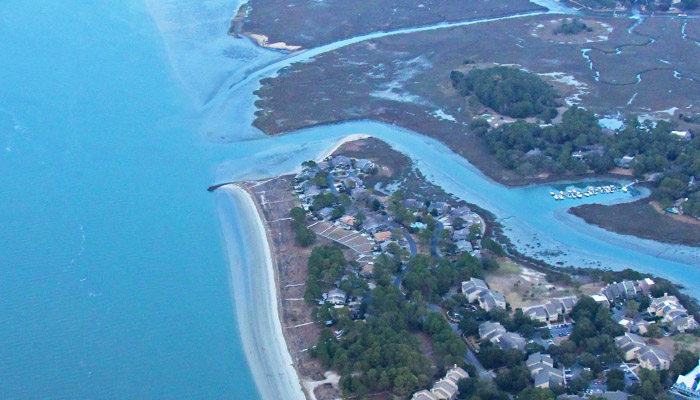
A Quick History of Hilton Head Island, South Carolina
Hilton Head Island’s history spans thousands of years, beginning with Paleo-Indian nomads and later evolving to Indigenous tribes constructing ceremonial shell rings. European explorers arrived in the 1500s, leading to plantation agriculture in the 1700s driven by enslaved West Africans, whose Gullah traditions continue to shape island life. During the Civil War, Hilton Head became a critical Union stronghold, ultimately leading to emancipation and the first self-governed Black town—Mitchelville. Today’s tourism prioritizes sustainability, reflecting complex layers yet to uncover.
Early Native American Settlements
When we examine Hilton Head Island’s earliest inhabitants, we find evidence of Paleo-Indian groups dating back to approximately 10,000–8,000 BCE. These nomadic hunter-gatherers seasonally visited the region, following migratory herds and coastal resources. Artifacts such as projectile points and tools located near Congaree Creek and Botany Bay reveal their transient lifestyle. Cooler climates at the time supported large, now-extinct animals, influencing patterns of prehistoric habitation by limiting permanent settlements. Rising sea levels during the Archaic Period led to the formation of the region’s distinctive sea islands, significantly shaping the environment inhabited by later Native American communities. Later, tribal migrations brought groups like the Escamacu and Yemassee, who engaged in semi-nomadic living, blending farming, fishing, and resource gathering. These tribes formed loose alliances with surrounding Muskogean-speaking villages, creating cultural and linguistic links throughout the Southeast, providing early social structure and stability for communities inhabiting the island.
Ancient Shell Structures and Enclosures
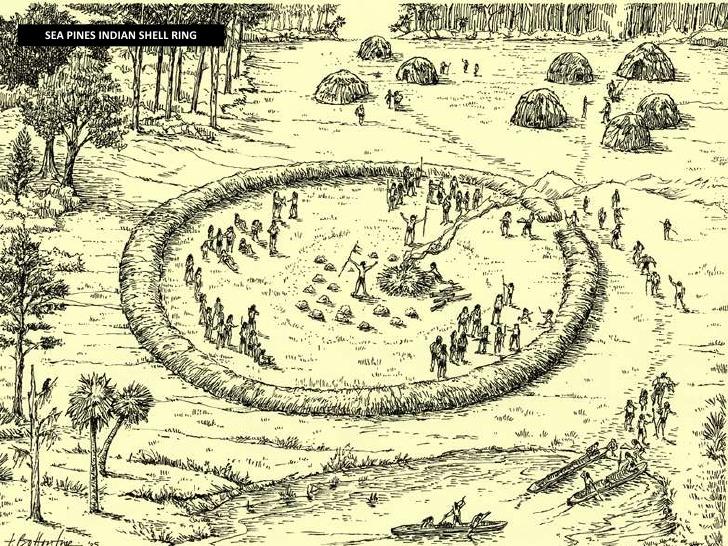
Two remarkable archaeological sites on Hilton Head Island—Green’s Shell Enclosure and Sea Pines Shell Ring—illustrate the diverse functions and cultural periods associated with ancient shell structures. Green’s Shell Enclosure, dating to approximately 1335 CE, represents a fortified village from the Irene phase, constructed rapidly for defensive purposes. Its sturdy embankment, built from shells and earth, provided safety against potential threats, underscoring its cultural significance as a protective settlement. Loose packing of oyster shells at Green’s Shell Enclosure indicates that its construction occurred rapidly. In contrast, Sea Pines Shell Ring, established around 4,800 years ago during the Late Archaic Period, served ceremonial and communal functions. Its circular arrangement and evidence of ritual activities reveal a community-oriented lifestyle. Both ancient structures reflect careful strategic placement near tidal creeks, ensuring reliable access to essential resources, promoting stability and security.
European Explorations and Early Encounters
Although indigenous peoples inhabited Hilton Head Island for millennia, European contact first occurred in 1521 with a Spanish expedition led by Francisco Cordillo. This initial Spanish Exploration set the stage for subsequent European Rivalries in the region. In 1526, Lucas Vázquez de Ayllón briefly established San Miguel de Guadalupe near Winyah Bay, but it failed quickly. French Impact appeared in 1562 when Jean Ribaut constructed Charlesfort on nearby Parris Island; however, settlers abandoned it within a year. Responding to French presence, Spain founded Santa Elena in 1566 on Parris Island as a defensive measure. Conflicts intensified when English privateer Sir Francis Drake attacked Spanish Early Settlements in 1586, considerably undermining Spain’s regional dominance and heightening tensions among European powers. Hilton Head Island received its name from English captain William Hilton, who explored the island in 1663, marking a significant step in English claims to the region.
Establishment of Permanent European Settlements
As we examine Hilton Head Island’s history, we first note the British Crown’s early land grants, including John Bayley’s 48,000-acre barony in 1698 and Colonel John Barnwell’s 1,000-acre grant in 1717, which marked initial European settlement efforts. Following the dissolution of the British-Yemassee alliance after the Yemassee War in 1715, European settlers seized the opportunity to establish permanent settlements, claiming formerly contested territories. These land claims inevitably sparked military confrontations and territorial disputes, shaping the island’s colonial development for decades.
Early Colonial Settlers
When examining Hilton Head Island’s colonial history, we see British efforts to establish a permanent presence beginning to take shape by the late 1600s. In 1698, British authorities granted John Bayley a substantial 48,000-acre land parcel covering most of the island. Bayley’s agent, Alexander Trench, managed early leases, briefly naming the area “Trench’s Island.” However, Colonel John Barnwell became one of Hilton Head’s first permanent early settlers in 1717, receiving a 1,000-acre grant within today’s Hilton Head Plantation. By 1766, around 25 families resided here, focusing on colonial agriculture like cotton, indigo, and rice. Although the island initially presented challenges such as isolation and tropical diseases, the settlers’ determination to establish safe, economically productive communities laid the foundation for lasting settlement.
Military and Land Conflicts
To fully understand how Hilton Head Island’s colonial settlements became permanent, we must examine the pivotal role military conflict and land disputes played. Early on, Native American Yemassee tribes resisted European encroachments, sparking the Yemassee War (1715-1717), which involved strategic attacks and land disputes that nearly dismantled Carolina settlements. Revolutionary War-era Hilton Head militia, known as “The Bloody Legion,” employed guerrilla military strategies against British loyalists, prompting retaliatory raids that damaged homes and local economies. Later, during the War of 1812, British naval assaults targeted symbolic Patriot properties, underscoring the island’s vulnerability to coastal invasions. These persistent military conflicts and land disputes ultimately transformed territorial boundaries and settlement patterns, laying foundations for secure, permanent European communities on Hilton Head Island.
Growth of Plantation Economy and Culture
Although Hilton Head Island is known today primarily for tourism, its early economic growth rested firmly on plantation agriculture. Starting in 1717, settlers like John Barnwell established plantations focusing on indigo, later evolving to highly profitable Sea Island cotton. By 1860, over twenty plantations operated on the island, efficiently utilizing plantation labor from enslaved West Africans, who made up over 90% of the local population. These plantations averaged 500–1,000 acres and executed tidal irrigation systems, greatly increasing crop yields and economic sustainability. The strategic location near Port Royal Sound enabled safe, efficient transport of cotton and indigo to European and domestic markets. As a result, Hilton Head emerged among the nation’s wealthiest regions per capita, largely driven by plantation agriculture exports.
The Emergence of Gullah Traditions
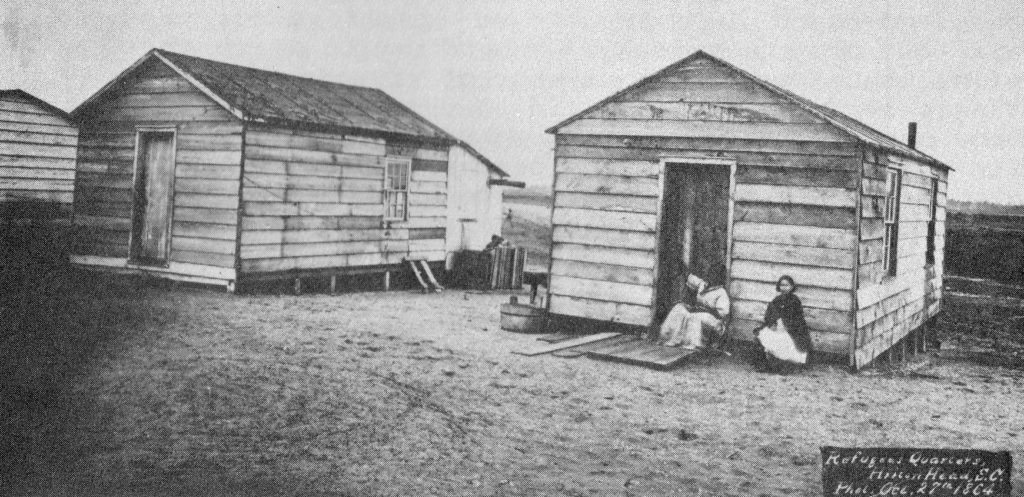
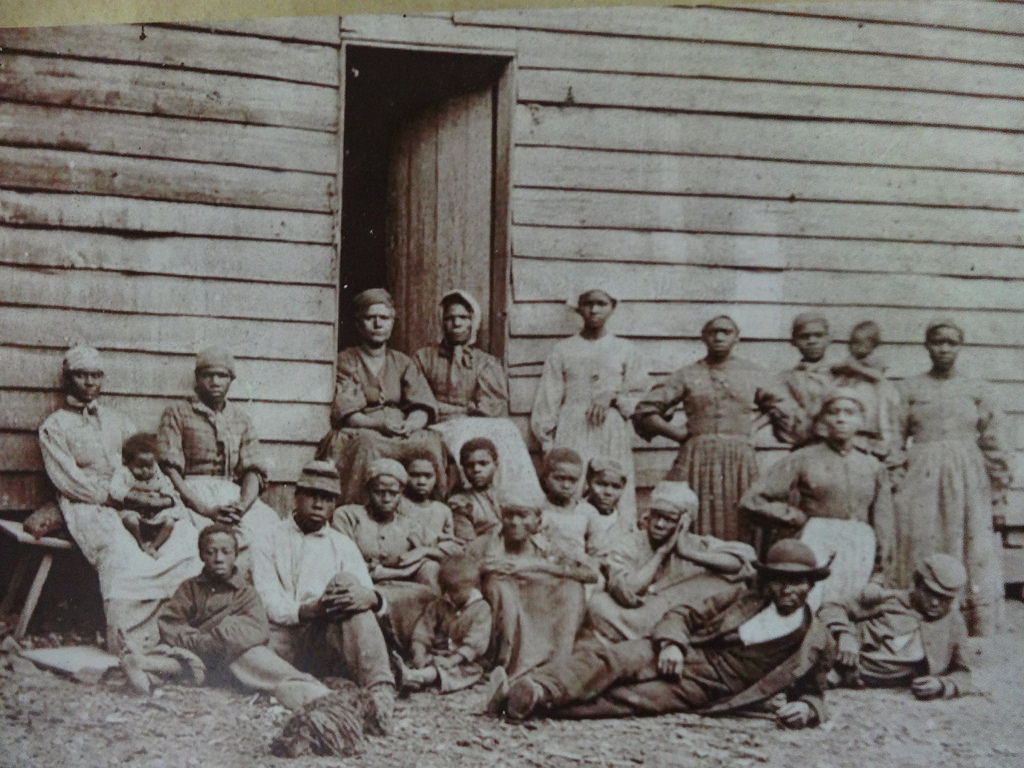
As we examine Hilton Head Island’s history, we recognize that Gullah culture emerged in the early 1700s, when enslaved West Africans were forcibly brought here to cultivate rice and cotton. Geographically isolated on the Sea Islands, these communities retained rich African traditions, developing the creole Gullah language and maintaining distinct kinship networks and communal land management practices. This isolation not only preserved their cultural integrity but also enabled the formation of Mitchelville in 1862, the first self-governed freedmen’s settlement, reinforcing Gullah autonomy and heritage.
Origins of Gullah Culture
When examining Hilton Head Island’s cultural history, we find the roots of Gullah traditions firmly embedded in the forced migration of enslaved West and Central Africans, whose diverse ethnic backgrounds—including Ashanti, Fula, Ibo, Mandingo, Yoruba, Bakongo, and Angolan—shaped the distinct cultural landscape. These groups brought unique cultural practices, deeply rooted African heritage, and specialized agricultural skills essential for rice plantations. Over time, their community resilience allowed the development of the Gullah language, a creole blending English vocabulary with African grammar. Storytelling traditions preserved ancestral knowledge, while culinary impacts—such as communal stews—maintained connections to African cuisine. Spiritual beliefs fused biblical themes and West African folklore, and craft techniques, particularly sweetgrass basket weaving and quilting, directly reflected their African origins.
Preservation Through Isolation
If we consider the period between Reconstruction and the Great Depression, Hilton Head Island’s geographic isolation emerges as a key factor in preserving Gullah cultural traditions. With boat-only access until 1956, island residents remained shielded from mainland cultural assimilation. This allowed the Gullah community to sustain West African linguistic forms, spiritual practices, and artisanal skills like sweetgrass basket weaving and indigo dyeing. Subsistence farming and fishing provided economic autonomy, reinforcing community cohesion and minimizing outside dependencies. Furthermore, collective land ownership and heirs’ property laws strengthened cultural resilience, helping families retain ancestral lands. Isolation also protected the integrity of oral storytelling, spirituals, and folk medicine, safeguarding important cultural knowledge and enabling the Gullah people to maintain a secure and distinct cultural identity amid external societal changes.
Hilton Head During the Civil War
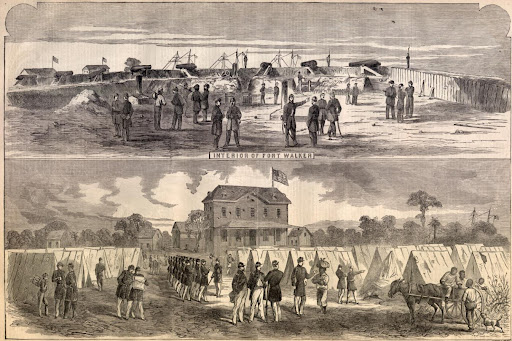
Although Hilton Head Island today is widely known for tourism, its strategic military significance during the Civil War profoundly shaped the island’s history. Understanding Union civil war strategies, we see they quickly recognized Hilton Head’s importance due to Port Royal Sound’s deep harbor, essential for controlling southern waterways and blockading key Confederate ports like Charleston, Savannah, and Beaufort. The November 1861 Union victory at Fort Walker secured Hilton Head as a significant military stronghold. Moreover, emancipation effects were immediate and substantial; over 1,000 enslaved individuals gained freedom, marking the war’s first large-scale emancipation. With extensive military fortifications, significant infrastructure, and the establishment of Mitchelville Freedmen’s Village, Hilton Head became a critical, secure base supporting Union operations and newly freed communities.
Reconstruction and Isolation of Island Communities
As we examine Hilton Head’s unique Reconstruction period, it becomes clear that its timeline differed markedly from the traditional national span of 1865–1876. Here, Reconstruction lasted from 1861, starting with Union occupation, until 1890, when land purchases by Northern industrialists ended the island’s isolation. During this extended period, over 700 freedmen acquired land, establishing Mitchelville in 1862—the first self-governed Black town in America. After the Army withdrew in 1868, residents shifted from paid military employment to subsistence farming, fishing, and oyster harvesting, demonstrating economic resilience amid cotton’s decline. Isolation protected community stability and preserved the distinct Gullah identity through oral traditions, crafts, and language. This sheltered environment provided long-term cultural continuity and safety for islanders until mid-20th-century developments.
20th-Century Bridges and Development Boom
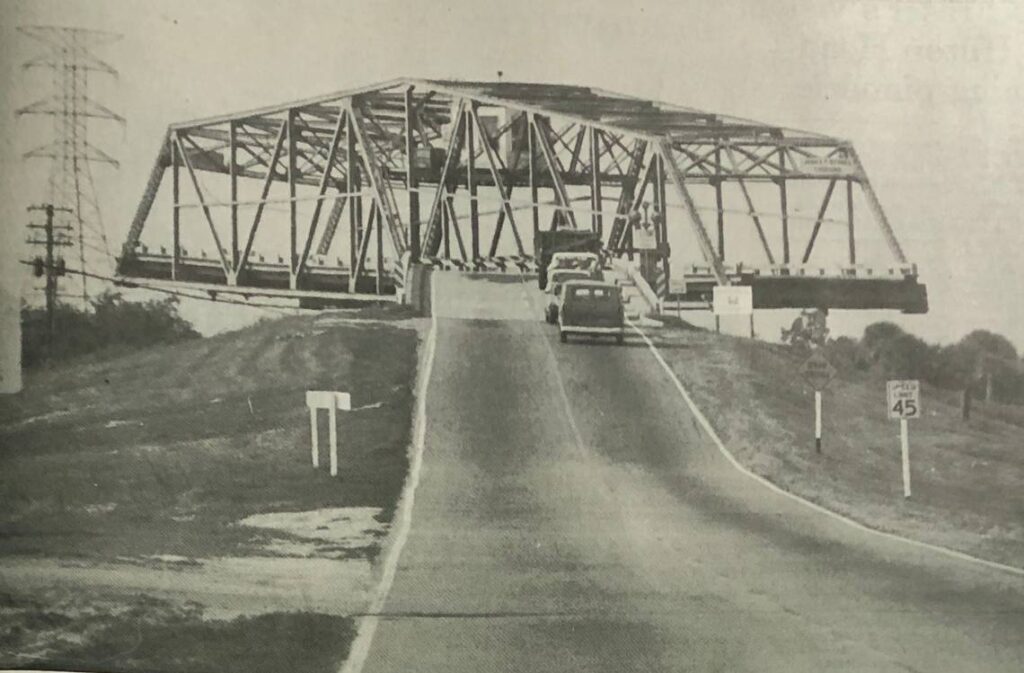
When the James F. Byrnes Bridge opened in 1956, it marked Hilton Head Island’s first direct road connection to the mainland. Funded through state money and toll revenue, this initial bridge construction cost around $1.5 million—roughly $16.5 million today. Although tolls ended in 1959 after debt repayment, the bridge’s swing-span design caused frequent closures due to ship collisions, raising safety concerns. By the 1980s, daily traffic reached 15,000 vehicles, necessitating the safer J. Wilton Graves Bridge in 1982, a fixed-span structure built for $290 million. Its increased capacity and safer design greatly boosted local economic impact, facilitating residential development and resort growth. As a result, our island’s population and visitor numbers rose dramatically, prompting further infrastructure enhancements and governance improvements.
Modern Tourism and Sustainability Initiatives
Since the opening of the Graves Bridge in 1982, Hilton Head Island has rapidly transformed into a premier tourism destination, welcoming over 3 million visitors annually and markedly boosting our local economy. In 2021 alone, tourism generated $2.80 billion in economic output and supported nearly 37,000 local jobs. To safely accommodate this growth, we’ve prioritized sustainable practices, maintaining strict land management ordinances preserving trees and limiting construction impacts. Eco tourism initiatives like Sea Pines Forest Preserve, Coastal Discovery Museum wildlife tours, and sea turtle conservation efforts actively protect our natural habitats. We’ve invested tourism tax revenue into beach renourishment, bike path maintenance, and workforce housing, carefully balancing visitor experiences with resident quality-of-life, traffic management, and our commitment to achieving carbon neutrality by 2035.